Ga., S.C. see a good turnaround in severe flu season
AUGUSTA, Ga. - The two-state region may have reached a turning point in the worst flu season in years.
Experts at the U.S. Centers for Disease Control and Prevention released the nation’s latest flu map Friday, and it shows the number of cases down in the region − especially in Georgia.
This week’s map − showing statistics for the week ending Jan. 10 − show South Carolina in the middle range of the “very high” level, down a notch from last week’s map. And Georgia has come down three notches to the top range of the “High” level.
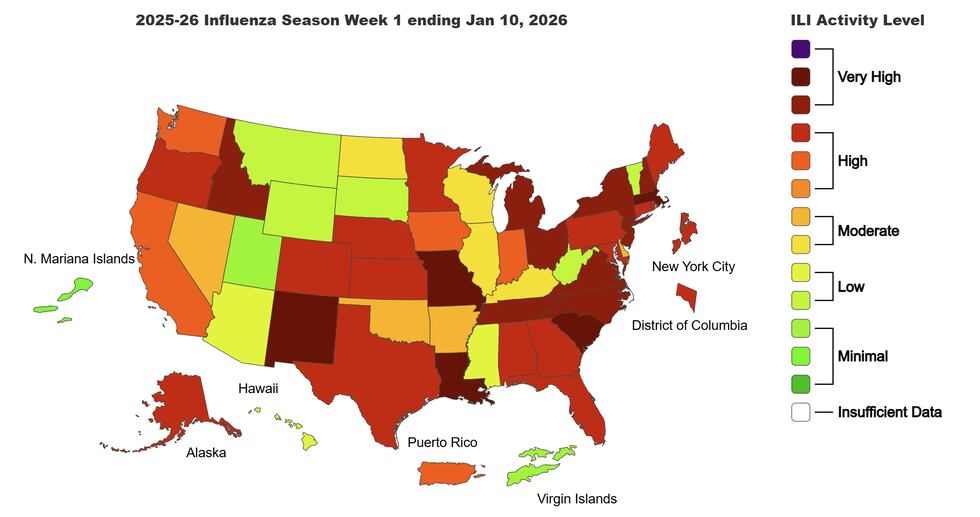
Last week’s map had shown Georgia and South Carolina with flu cases at the highest possible level on the chart.
Although the maps are released weekly, they reflect data that’s delayed because it takes that long to get the statistics from across the country.
South Carolina released some hard numbers this week that back up what we’re seeing on the national map.
S.C. measles outbreak still flaring with 124 more cases in 3 days
The South Carolina Department of Public Health is reporting 124 new cases of measles in the state since Tuesday, bringing the total number of cases in South Carolina related to the Upstate outbreak to 558.

While the state was still seeing widespread flu activity, the number of cases decreased from 3,705 in the last week of December to 2,145 cases in the first week of January.
Officials said 501 people were hospitalized in South Carolina at 54 different hospitals, down by 337 cases from the previous week’s 838.
However, the number of flu-related deaths rose by 10, going from nine to 19. Last week, South Carolina saw its first pediatric flu death of 2026.
A full record of weekly flu surveillance reports is available by clicking/tapping here.
The worst flu season in years
Some measures show this season is already surpassing the flu epidemic of last winter, one of the harshest in recent history. And experts believe there is more suffering ahead.
Sewage tests can detect measles: Why don’t Ga., S.C. do that?
Wastewater surveillance could show the spread of measles, but the two-state doesn't have extensive testing in place.

One type of flu virus, called A H3N2, historically has caused the most hospitalizations and deaths in older people. So far this season, that is the type most frequently reported. Even more concerning, more than 91% of the H3N2 infections analyzed were a new version — known as the subclade K variant — that differs from the strain in this year’s flu shots.
The last flu season saw the highest overall flu hospitalization rate since the H1N1 flu pandemic 15 years ago. And child flu deaths reached 289, the worst recorded for any U.S. flu season this century — including that H1N1 “swine flu” pandemic of 2009-2010.
So far this season, there have been at least 15 million flu illnesses and 180,000 hospitalizations, the U.S. Centers for Disease Control and Prevention estimates. It also estimates there have been 7,400 deaths, including the deaths of at least 17 children.
What to know about the flu
Flu symptoms and their severity can vary, but generally include fever, cough, sore throat, runny or stuffy nose, body aches, headache, chills and fatigue.
Some people are at higher risk of developing serious complications if they get sick. This includes people 65 years and older, people of any age with certain chronic medical conditions such as asthma, diabetes, or heart disease, pregnant women, and children younger than 5 years, but especially those younger than 2 years old.
Bird flu strikes a Georgia commercial flock of 71,000
This is the first case of the year and the fourth at a commercial poultry operation in Georgia since the ongoing, nationwide outbreak began in February 2022.
In some cases, health care providers may recommend prescription antiviral drugs to treat the flu.
There are other tried and true measures you can take to help prevent the spread of flu:
- Frequent and thorough handwashing with soap and warm water. Alcohol-based gels are the next best thing if you don’t have access to soap and water.
- Cough or sneeze into the crook of your elbow or arm to help prevent the spread of the flu.
- Avoid touching your face because the virus can get into the body through the mucus membranes of the nose, mouth and eyes.
- If you are sick, stay home from school or work. Flu sufferers should be free of a fever, without the use of a fever reducer, for at least 24 hours before returning to school or work.
- If you are caring for a sick individual at home, keep them away from common areas of the house and other people as much as possible.
For more information on signs and symptoms of the flu, visit www.cdc.gov/flu/signs-symptoms/index.html.
Copyright 2026 WRDW/WAGT. All rights reserved.