States nationwide turn to Mississippi for literacy solutions as reading crisis spreads
The state that jumped from 49th to ninth nationally in reading is now guiding other states seeking literacy improvements.
JACKSON, Miss. (InvestigateTV) — Education officials in nearly 40 states are studying Mississippi’s dramatic literacy transformation.
Mississippi, once ranked 49th nationally in fourth-grade reading scores in 2013, now ranks ninth in the nation and leads the country in overall reading improvement.
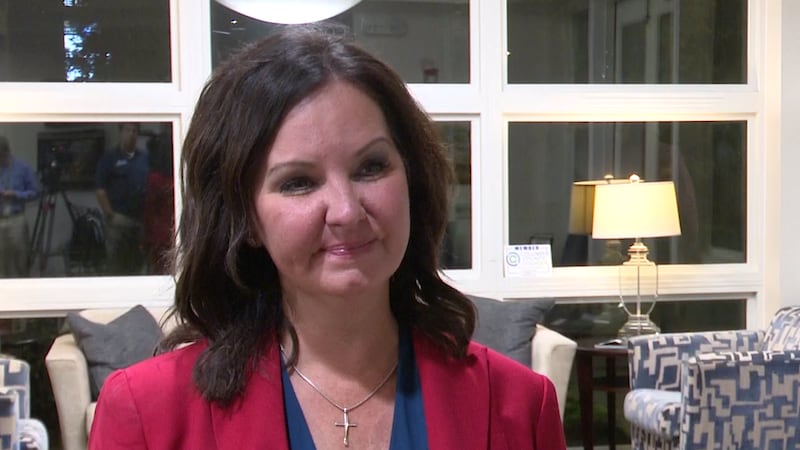
Amanda Malone, Mississippi’s state literacy director, said the transformation required sustained effort rather than chance.
“A lot of times people call it the Mississippi miracle,” Malone said. “Now, miracle implies that humans had nothing to do with it. And so it’s not a miracle. Don’t call it the Mississippi miracle. It is really a marathon.”
Mississippi’s literacy transformation
That marathon began in 2013 when state lawmakers passed sweeping legislation aimed at transforming reading instruction. The reforms included hiring literacy coaches to help teachers in classrooms, retraining teachers in science-based reading instruction and requiring third-graders to demonstrate reading proficiency to advance to fourth grade.
According to Mississippi’s 2023 annual report, 29 states and jurisdictions contacted Mississippi for literacy policy guidance and support. That number jumped to 36 states by November this year.
The state’s initial third-grade reading pass rate reached an all‑time high of 76.3 percent in 2023, with 84.9 percent of students ultimately passing after final retests.
Shamekia Harris, a kindergarten teacher at Shirly Elementary in Jackson, Mississippi, initially opposed the retention law but now supports the comprehensive approach.
“Initially, I didn’t like it because I was thinking, okay, well, if that was my child, you know, sometimes students, they have a bad day,” Harris said. “Maybe they just didn’t do well on that test, but it doesn’t mean that he or she doesn’t know the material. But now I feel like, okay, we know about the test, so let it pre-K and make sure the students are getting everything that they need to ensure their success for the third-grade assessment.”
Broader academic improvements
Mississippi’s literacy focus has coincided with improvements across multiple academic areas. The state achieved record-breaking graduation rates of 88.9 percent in 2022-23, with dropout rates falling to 9 percent. Among students with disabilities, graduation rates nearly tripled from 23.2 percent in 2014 to 67.1 percent in 2023.
Student achievement reached all-time highs in 2022-23, with 52.6 percent of students scoring proficient or advanced in mathematics, 46.7 percent in English language arts, 59.4 percent in science and 71.4 percent in U.S. history.
The National Council on Teacher Quality recognized Mississippi and Colorado as the top two states in 2023 for ensuring scientifically based reading instruction in teacher preparation programs.
Georgia’s different approach
In Georgia, 70 percent of fourth-graders cannot read proficiently, according to the National Assessment of Educational Progress.
Now, schools in the Peach State are replicating many of Mississippi’s initiatives to combat their literacy crisis, but districts are not required to hold third-graders back if they cannot read on grade level.
According to a Georgia Department of Education spokesperson, districts can waive the retention requirement as part of their Charter System or Strategic Waiver contracts with the state, and the majority have done so.
More states are paying attention
Georgia is not the only state with education leaders studying the solutions in the Magnolia State.
Mississippi education leaders say 37 states, including Florida, Texas and North Carolina, have now reached out to the state for literacy policy guidance and support. Educators in Washington, D.C., have also reached out.
The full list:
- Arizona
- Alabama
- Alaska
- Arkansas
- California
- Connecticut
- Colorado
- Delaware
- Florida
- Georgia
- Hawaii
- Idaho
- Indiana
- Kansas
- Kentucky
- Louisiana
- Maryland
- Massachusetts
- Michigan
- Minnesota
- Missouri
- Nebraska
- New Hampshire
- New Mexico
- New York
- North Carolina
- Pennsylvania
- South Carolina
- South Dakota
- North Dakota
- Ohio
- Oregon
- Tennessee
- Texas
- Utah
- Vermont
- Virginia
- Washington, D.C.
Overcoming perception challenges
Despite its success, Mississippi still faces perception problems after decades of poor educational rankings. During an October debate, New Jersey gubernatorial candidates highlighted this challenge.
“We need to do what Mississippi and Louisiana did, high-impact curriculum,” said Republican candidate Jack Ciattarelli. Democratic candidate Mikie Sherrill responded, “Interesting how he keeps citing places like Mississippi and Louisiana. I think some of the worst schools in the entire nation.”
Today, Mississippi’s graduation rates exceed the national average, and assessments show no state performs better for low-income students or students of color learning to read.
“It makes me so proud. It really brings tears to my eyes,” Malone said. “Because again, literacy is a human right. It is for everyone. You know, Mississippi used to be the one that we could always make an assumption about. Well, not anymore.”
Copyright 2026 Gray Media Group, Inc. All Rights Reserved.